



Your cart is empty
Lottoland 29 October 2026
Payouts, Insurance and Side Bets
Blackjack Payouts Explained - A Guide For South African Players
- WHAT HAPPENS WHEN YOU DON'T CHECK TABLE RULES
- THE BASICS: HOW STANDARD HANDS ARE SETTLED
- THE BIG DIFFERENCE: 3:2 VS. 6:5 BLACKJACK PAYOUTS
- INSURANCE AND OPTIONAL SIDE BETS
- OPTIONAL SIDE BETS
- 5 OTHER TABLE RULES THAT IMPACT GAMEPLAY AND PAYOUTS
- EXPLORING BLACKJACK TABLES ON LOTTOLAND
- KEEPING ENTERTAINMENT RESPONSIBLE
WHAT HAPPENS WHEN YOU DON'T CHECK TABLE RULES
I was playing live dealer blackjack at a land-based casino in the UK a while back, and after a few hands I was dealt a natural blackjack on a R10 bet. I was expecting to be paid out R15 in profit, but the dealer only gave me R12. It was at this moment I knew I hadn't checked the game details fully before sitting down.
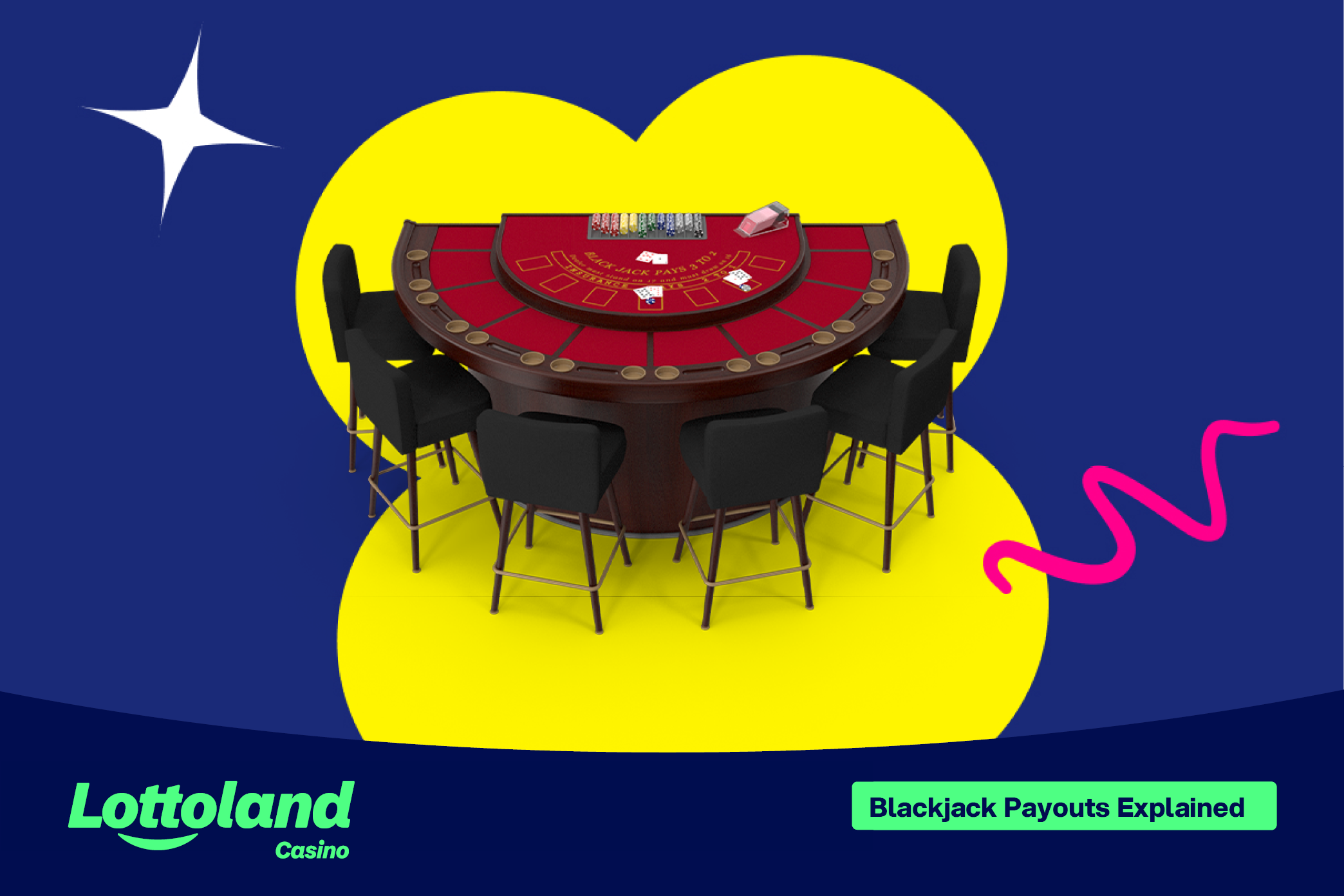
The way a "natural" blackjack is paid out is incredibly important. A natural blackjack occurs when your initial two-card hand totals 21 (an Ace combined with a 10, Jack, Queen, or King). Typically this information is printed on the virtual felt overlay and will say "Blackjack pays 3:2" or "Blackjack pays 6:5" near the chip tray.
These ratios define the table's baseline payouts, determining how much a winning hand returns relative to your original stake. Whether you are exploring classic card games or trying out South African live games, understanding blackjack payouts and how individual table rules shape gameplay helps you choose a table with confidence.
This particular felt didn't have the blackjack payout ratio printed in big letters across the table. When I asked the dealer how much blackjacks paid, she pointed to the placard on the corner of the table. In fine print it read, Blackjacks pay 6:5. Unfortunately the R12 payout was correct for that particular table, but it was my cue to colour up my chips on that table and go find a traditional 3:2 table instead. So learn from my mistake: checking the rules and payouts, whether in person or online, just takes five seconds and you'll be sure to sit at a table that works for you.
THE BASICS: HOW STANDARD HANDS ARE SETTLED
Before we get into the nuances of more interesting blackjack hands like natural blackjack, side bet payouts, or insurance, we need to discuss how standard hands work. In most standard blackjack games, hand outcomes are settled by comparing your final point total against the dealer's total. Standard payouts generally follow a simple, uniform structure:
- Standard Hand Win (Pays 1:1): If your hand total beats the dealer's without exceeding 21, you receive an even-money payout. A winning R10 bet returns your R10 stake plus R10 in profit.
- Push (Tie): If both you and the dealer finish with identical point totals, the round results in a push. Your original stake is returned to your balance with no win or loss.
- Loss: If your hand total exceeds 21 (a "bust") or the dealer finishes closer to 21, your bet is collected by the house.
THE BIG DIFFERENCE: 3:2 VS. 6:5 BLACKJACK PAYOUTS
So why does the natural blackjack payout ratio matter so much? If blackjack pays 3:2 or 6:5, who cares if both pay more than a standard winning hand, right?
It matters quite a bit. A common misconception among beginners is that 6:5 sounds larger than 3:2 simply because the numbers are bigger, but these figures represent ratios. Let's look at the difference in payouts with a few examples:
Blackjack 3 to 2 Payout: Take a standard table featuring a blackjack 3 to 2 payout. A natural blackjack pays R3 in profit for every R2 wagered (or 1.5 times your stake). For example, on a R5 bet, a 3:2 payout delivers R7.50 in profit. On a R10 bet, it yields R15 in profit, on a R20 bet, it pays R30 in profit, and so on.
Blackjack 6 to 5 Payout: On tables using a blackjack 6 to 5 payout, a natural blackjack pays R6 in profit for every R5 wagered (or 1.2 times your stake). On a R5 bet, a 6:5 payout delivers R6 in profit. On a R10 bet, it yields R12 in profit, on a R20 bet, it pays R24 in profit, and so on.
A R3 difference on a R10 hand might seem small during a brief round, but natural blackjacks occur roughly once every 21 hands on average. Over time, playing on a 6:5 table increases the house edge by more than a full percentage point compared to a traditional 3:2 table.
INSURANCE AND OPTIONAL SIDE BETS
When I first started exploring live dealer games, the interface offered a prompt for "Insurance" as soon as the dealer showed an Ace, alongside colourful chips for optional side bets.
Insurance is essentially a side bet that the dealer has blackjack. A common misconception beginner players have is that you are insuring your hand when you take insurance. This couldn't be further from the truth. Whether you have a measly total of 5, a bad hand totalling 16, or a pair of 10s for a strong hand of 20, if the dealer is showing an ace, there is a 30.7% chance that the dealer has blackjack. If they have a blackjack, your hand is over regardless of whether you have a strong or weak hand.
Because an insurance payout is 2:1, it might seem like a smart bet. However, the house has a much larger edge on this side bet compared to the original wager you placed in the betting circle. In fact, a standard insurance wager has a house edge of around 5% to 6%, depending on the game. This is why insurance is generally considered an unfavourable wager for players.
OPTIONAL SIDE BETS
Beyond insurance, most live dealer streams toss a few extra side bets onto the felt overlay that you can place at the beginning of your round if you desire. For example, many live tables offer side wagers like 21+3, Perfect Pairs, or variant-specific options like Pot of Gold:
- 21+3 Side Bets: Combine your starting two cards with the dealer's upcard to form three-card poker combinations (such as a Flush, Straight, or Three of a Kind). Payouts scale based on the hand rarity. To learn more about how these form, take a look at our 21+3 blackjack side bet guide.
- Perfect Pairs: Awards a payout if your first two cards form a mixed pair, colored pair, or suited pair.
- Pot of Gold (Variant-Specific): Offered exclusively on Free Bet Blackjack tables, this bet pays out based on the total number of Free Bet tokens (free doubles and free splits) you accumulate during a single hand. The payout multiplier increases with every free token collected across all re-splits and doubles for the hand.
While blackjack side bets introduce higher potential payout multipliers, they are separate from the main hand and carry a higher house edge.
5 OTHER TABLE RULES THAT IMPACT GAMEPLAY AND PAYOUTS
Beyond base payout ratios, overall game flow is shaped by individual table rules. Clicking the settings icon ("i") in the game menu allows you to verify five key mechanics:
- Dealer Soft 17 Rules (S17 vs. H17): A "soft" hand contains an Ace counted as 11 (such as Ace-6). Tables marked "Dealer Stands on All 17s" (S17) require the dealer to stop drawing cards at 17, which has a lower house edge compared to tables where the dealer hits soft 17 (H17).
- Double After Split (DAS): Some tables allow you to double down after splitting a pair, while others don't. Being allowed to double after splitting is mathematically a better game in the long run.
- Double Down Constraints: Some formats allow you to double your bet on any starting two-card combination, while other variants restrict doubling down to initial hand totals of 9, 10, or 11. Allowing double downs on more starting hands generally gives the player a more favorable game.
- Splitting Limits: Check how many times you can split pairs, and whether the table supports Resplitting Aces (RSA). Being able to split more is more beneficial to the player than a table that restricts splits.
- Push on 22 Rules: In Free Bet Blackjack, the dealer typically pushes when their final total is 22. This rule helps offset the player-friendly free doubles and free splits offered.
EXPLORING BLACKJACK TABLES ON LOTTOLAND
Knowing how payouts and rules work makes choosing a title straightforward. Depending on your personal preferences, several variations are available:
- Live Blackjack: Classic 7-seat live streams featuring real dealers and standard 3:2 payout structures.
- Live Easy Blackjack: Some players may find this format easier to follow because it strips away extra screen clutter so you can focus purely on basic hit or stand decisions.
- Live Infinite Blackjack: Eliminates waiting times by allowing an unlimited number of participants to play off a single, shared deal.
- First Person Blackjack: A single-player 3D digital table game (RNG) that allows you to play at your own speed without decision timers.
- Lightning Blackjack: Adds dynamic payout multipliers on consecutive winning hands, balanced by a fee on every wager.
KEEPING ENTERTAINMENT RESPONSIBLE
All online gambling games involve financial risk, and outcomes are ultimately driven by chance. Understanding table rules and payout mechanics allows you to make informed decisions, but no strategy or system can eliminate the house edge or guarantee a positive result.
To keep your session fun and balanced:
- Set a Session Budget: Decide on a comfortable spend limit before logging in, and never view gambling as a way to generate income or resolve financial needs.
- Take Regular Breaks: Step away from the screen periodically to maintain clear judgment.
- Avoid Chasing Losses: Experiencing losing rounds is a normal part of chance-based games. Increasing stakes to recover lost funds can lead to unsafe spending habits.
If you ever want to establish deposit limits or schedule reality checks, visit our Safer Gambling page.
Blackjack FAQ
Is 6:5 blackjack ever worth playing?
For most players, no. A 6:5 table pays R12 profit on a R10 natural blackjack, compared with R15 at a 3:2 table. Because naturals come up roughly once every 21 hands, that gap adds up, and it raises the house edge by more than a full percentage point. If a 3:2 table is available at a similar stake, it is the better choice. No table removes the house edge, so always check the payout ratio and set a session budget before you play.
Does a blackjack always beat the dealer?
Not always. A natural blackjack (an Ace plus a 10, Jack, Queen or King as your first two cards) beats every other hand, including a 21 made with three or more cards. The one exception is when the dealer also has a natural blackjack, in which case the round is a push.
What happens if both the dealer and I have blackjack?
The round is a push. Your original stake is returned and you neither win nor lose on the main bet. If you placed an insurance bet, it is settled separately and pays 2:1.
Should I ever take insurance in blackjack?
Insurance is generally considered an unfavourable bet. It is a side bet that the dealer has blackjack, and it does not protect your hand, whatever its total. Although it pays 2:1, the house edge on insurance is around 5% to 6%, well above the edge on your main wager. Insurance is optional and you can decline it, and doing so is the usual choice for players looking to limit the cost of their session.
What is even money in blackjack, and is it the same as insurance?
Even money is an offer made when you have a natural blackjack and the dealer shows an Ace. Instead of waiting to see whether the dealer also has blackjack, you accept a 1:1 payout straight away. It is mathematically identical to taking insurance with a blackjack in your hand. On a R10 bet with R5 insurance, you win R10 whether or not the dealer has blackjack, which is the same as even money. Accepting it means giving up the chance of the full 3:2 payout, so it carries the same unfavourable odds as insurance.
What is the difference between 21+3 and Perfect Pairs?
Both are optional side bets placed before the cards are dealt, and both are settled separately from your main hand. The difference is which cards they use:
- 21+3 combines your first two cards with the dealer's upcard to form a three-card poker hand, such as a flush, straight or three of a kind.
- Perfect Pairs looks only at your first two cards and pays if they form a mixed pair, a coloured pair or a suited pair.
Payouts vary by table, so check the rules before you place either bet. Side bets carry a higher house edge than the main hand.
What does "Blackjack pays 3:2" mean on the table?
It means a natural blackjack pays R3 in profit for every R2 you wager, or 1.5 times your stake. On a R10 bet you win R15 in profit, and R25 is returned to your balance including your stake. This is the traditional payout and is better for the player than 6:5, which pays R12 profit on the same R10 bet.
A
by
A1 Blackjack
A1 Blackjack
» Read all stories from A1 BlackjackA1 Blackjack is an advantage player and gambling educator who specialises in finding and explaining legitimate ways to gain an edge over casino games. Best known for his work in blackjack, he teaches players how card counting, bankroll management, and disciplined play can overcome the house edge under the right conditions.
In addition to blackjack, A1 Blackjack creates educational content covering slot advantage play, casino promotions, and other advantage-play opportunities. Through his YouTube channel, Patreon, social media platforms, and training resources, he has built an audience of hundreds of thousands of followers interested in the mathematics and strategy behind beating casino games.
His goal is to help players better understand how advantage play works, separate fact from fiction, and approach casino gambling from a strategic and analytical perspective.
